I. The Systemic Exfiltration
In late 2025, a Tier-1 asset management firm inadvertently compromised quarterly projection models. The exfiltration vector was not a sophisticated breach, but a catastrophic $10M copy-paste error: a junior analyst submitted proprietary CSV data into a public AI instance to “format a deck.”
For law and finance entities, this represents a severe data exfiltration event driving the industry-wide ban on public AI.
II. The Leak Path
- Ingestion: Proprietary datasets are submitted to third-party public models.
- Retention: Per default Terms of Service (TOS), the provider retains input data for “Service Improvement” or “Safety Research.”
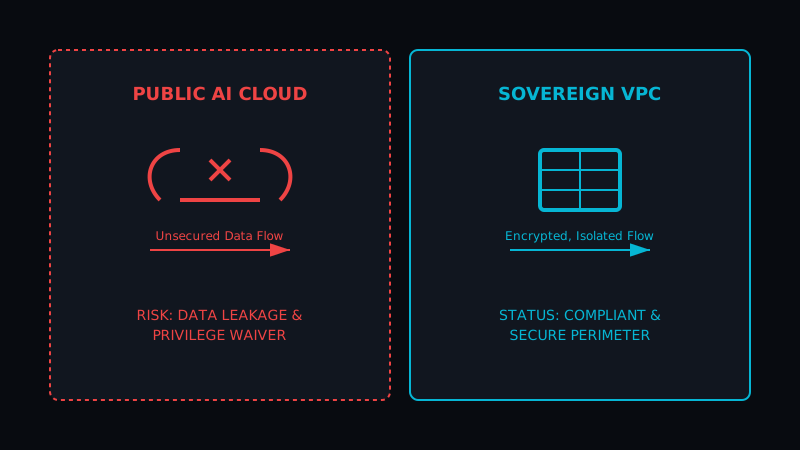
- Latent Exposure: The data leaves the organization’s jurisdictional control, effectively waiving Attorney-Client Privilege and risking data regurgitation in future model iterations.
III. The Air-Gapped Solution
For high-stakes operations, reliance on external APIs for Tier-1 Data is an unacceptable Operational Liability.
GridBase mandates the deployment of Sovereign Architectures. We design Private VPCs (Virtual Private Clouds) utilizing high-reasoning open-weight models like Mistral-Large or Llama-3-70B.
- Egress Lockdown: The inference environment is configured with zero outbound internet gateways, preventing telemetry leakage.
- Volatile State: Context windows are processed via ephemeral RAM and purged immediately post-generation.
IV. Doctrine
Security is not a policy document; it is architecture. Organizations that do not control their weights do not control their data.